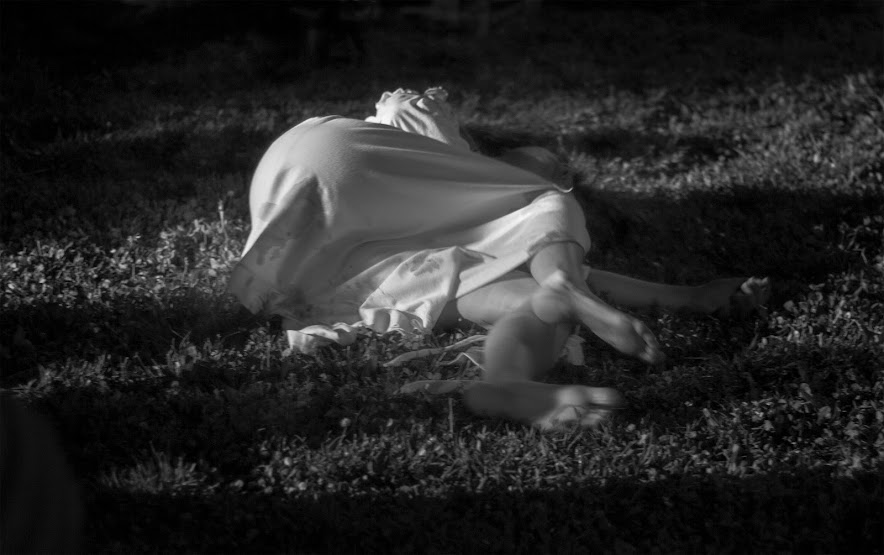
Inconciencia cotidiana, instalación artística/ escultura blanda
Inconciencia cotidiana

Inconciencia cotidiana, obra del artista colombiano
Manuel Velandia, es una instalación que convierte la sangre en archivo, el
cuerpo en testimonio y la memoria en materia compartida. No representa
simplemente la violencia: la convoca, la hace comparecer y la obliga a dejar de
ser estadística, rumor o nota marginal.
La obra rinde homenaje a las víctimas del conflicto armado colombiano
pertenecientes a los sectores sociales LGBT y, al mismo tiempo, nombra a
quienes han sido asesinados/æs, agredidos/æs, desplazados/æs, humillados/æs o
borrados/æs por vivir por fuera de las normas heterosexuales y cisgeneristas.
Muchas de esas vidas apenas reciben una línea en la prensa amarillista, una
cifra en un informe o una breve nota en el inventario del horror, como si sus
muertes dolieran menos.
Las telas de colores arcoíris y trans no son banderas festivas ni
emblemas domesticados por la inclusión institucional. Son superficies heridas,
pieles colectivas, soportes de inscripción política. Sobre ellas aparecen
rastros de ADN y sangre de muchas personas de los sectores sociales LGBT:
signos materiales de vidas atravesadas por el estigma, el odio, la
discriminación, la amenaza, el desplazamiento, la persecución y la violencia
encarnada.
La instalación invita a reunir, a través de la sangre,
historias personales de daño, exclusión y supervivencia. Cada mancha porta una
biografía. Cada marca recuerda que la violencia no ocurre en abstracto: pasa
por el cuerpo, altera la respiración y modifica la forma de caminar, amar,
hablar, callar y habitar la calle, la casa, la escuela, el trabajo, la noche y
el deseo. Allí donde el poder intentó fabricar vergüenza, la obra produce
memoria. Allí donde la violencia quiso aislar, la sangre reúne.
El título de esta escultura blanda desplaza la mirada hacia un
campo político decisivo: la violencia contra las personas de los sectores
sociales LGBT no se limita a los crímenes visibles. También se produce en los
gestos mínimos de la normalidad: la burla, la sospecha, el silencio cómplice,
la mirada que descalifica, la institución que aplaza, la familia que expulsa,
la policía que no protege, el Estado que llega tarde y la prensa que convierte
el asesinato en espectáculo morboso.
La corona de espinas, en un guiño cristiano, no decora las telas: las
aprieta. No embellece: denuncia. Expone la estructura que busca sujetar la
diferencia, disciplinar el deseo, castigar la existencia y convertir la
diversidad sexual no heteronormativa en una experiencia vigilada. Esa atadura
condensa una pedagogía del daño: el poder no solo mata; también marca, ordena,
clasifica, amenaza y obliga a sobrevivir bajo presión.
Por eso, esta instalación no pide compasión. Exige reconocimiento,
verdad y responsabilidad. Recuerda que la memoria no se escribe únicamente con
documentos oficiales, sentencias, archivos institucionales o fechas
conmemorativas. También se escribe con fluidos, telas, manchas, restos y
cuerpos que se niegan a desaparecer del relato público. La sangre, en esta
obra, no es espectáculo del dolor; es prueba de existencia, vínculo político y
acusación ética.
Inconciencia cotidiana nos obliga a mirar aquello
que la sociedad preferiría no saber: la discriminación cotidiana también
sangra; el odio tiene historia; la indiferencia produce cadáveres; la violencia
simbólica prepara la violencia física. Aquí, la sangre no divide. Reúne. Junta
las historias que el miedo intentó dispersar y convierte la herida individual
en archivo colectivo.
La imagen fue utilizada el 26 de junio de 2023 en materiales
promocionales y en la exposición multidisciplinar presentada por la UACM,
Universidad Autónoma de la Ciudad de México, en el marco del Festival
Internacional por la Diversidad Sexual (FIDS 2026), en el Centro Cultural
Vlady. Fue mostrada por primera vez en DC Galería, en la exposición “(CÓMIC
x NO) gráfico. INCONCIENCIA COTIDIANA”, Bogotá, agosto de 2023.
Everyday Unconsciousness
Everyday Unconsciousness, a work by Colombian artist Manuel Velandia, is an installation that
turns blood into archive, the body into testimony, and memory into shared
matter. It does not merely represent violence; it summons it, makes it appear,
and forces it to stop being a statistic, a rumor, or a marginal note.
The work pays homage to victims of the Colombian armed
conflict who belonged to LGBT social sectors, while also naming the victims of
an ongoing social war: people murdered, assaulted, displaced, humiliated, or
erased for living outside heterosexual and cisgender norms. Many of those
broken lives receive only a line in the sensationalist press, a number in a
report, or a brief note in the inventory of horror. Society names them late,
badly, or not at all, as if their deaths hurt less, as if their bodies had
already been stripped of the right to matter.
The rainbow and trans-coloured fabrics are not festive
flags, nor emblems tamed by the institutional rhetoric of inclusion. They are
wounded surfaces, collective skins, grounds for political inscription. Upon
them appear traces of DNA and blood from many people of LGBT social sectors:
material signs of lives crossed by stigma, hatred, discrimination, threat,
displacement, persecution, and embodied violence.
The installation invites us to gather, through blood, personal histories of harm,
exclusion, and survival. Each stain carries a biography. Each mark reminds us
that violence does not happen in the abstract: it passes through the body,
alters the breath, and changes the way one walks, loves, speaks, keeps silent,
and inhabits the street, the house, the school, work, the night, and desire.
Where power tried to manufacture shame, the work produces memory. Where
violence tried to isolate, blood gathers.
The title of this soft sculpture shifts our
gaze toward a decisive political field: violence against people of LGBT social
sectors is not limited to spectacular crimes. It is also produced every day
through the smallest gestures of normality: the joke, the suspicion, the
complicit silence, the disqualifying stare, the institution that postpones, the
family that expels, the police that do not protect, the State that arrives too
late, the press that turns murder into morbid spectacle, and a society that
learns to live with discrimination without feeling that anything has broken.
The crown of thorns, a Christian gesture, does not
decorate the fabrics; it tightens them. It does not beautify; it denounces. It
exposes the structure that seeks to restrain difference, discipline desire,
punish existence, and turn non-heteronormative sexual diversity into a
surveilled experience. That binding condenses a pedagogy of harm: power does
not only kill; it also marks, narrows, orders, classifies, threatens, and
forces survival under pressure.
For that reason, this installation does not ask for
compassion. It demands recognition, truth, and accountability. It reminds us
that memory is not written only through official documents, court rulings,
institutional archives, or commemorative dates. It is also written through
fluids, fabrics, stains, remains, and bodies that refuse to disappear from the
public story. Blood, in this work, is not a spectacle of pain; it is proof of
existence, political bond, and ethical accusation.
Everyday Unconsciousness forces us to look at what
society would rather not know: everyday discrimination also bleeds; hatred has
a history; indifference produces corpses; symbolic violence prepares physical
violence; everybody despised by the norm carries a memory that can no longer be
treated as private damage. Here, blood does not divide. It gathers. It brings
together the stories fear tried to scatter and turns the individual wound into
a collective archive.
The image was used on June 26, 2023, in promotional
materials and in the multidisciplinary exhibition presented by UACM, the
Autonomous University of Mexico City, as part of the International Festival for
Sexual Diversity (FIDS 2026) at the Vlady Cultural Center. It was first shown
at DC Galería in the exhibition “(COMIC x NO) Graphic. EVERYDAY
UNCONSCIOUSNESS,” Bogotá, August 2023.


Comentarios
Publicar un comentario